
✔ Updated · new stovetop candy recipe with step photos, thermometer stages and a troubleshooting table
This old-fashioned fudge is the real cooked kind: sugar, cocoa, milk and butter boiled to soft-ball stage, cooled, then beaten by hand until it turns from shiny to matte. It's firm, smooth and more chocolatey than any shortcut version I've tried.
How Do You Make Old-Fashioned Fudge? (Quick Answer)
Whisk 3 cups of sugar with 2/3 cup of cocoa and a pinch of salt, stir in 1 1/2 cups of whole milk and a tablespoon of corn syrup, and bring to a boil. Stop stirring and cook to 236°F, the soft-ball stage. Off the heat, set butter and vanilla on top and cool, untouched, to 110°F. Beat until it thickens and loses its gloss, then press into a buttered 8-inch pan and cut into 36 squares.
At a glance
The one tip that matters: The whole recipe lives in two moments: don't stir once it boils, and don't beat until it has cooled to 110°F. Break either rule and you get grainy fudge, and I've done both.
Why You'll Love This Fudge
- Deep, dark cocoa flavor because there's no condensed milk or marshmallow creme to dilute it.
- Firm and smooth, never gummy it slices into clean squares that hold their shape in a cookie tin.
- Seven pantry ingredients sugar, cocoa, milk, butter, vanilla, salt and a spoon of corn syrup.
- Thermometer temps for every stage plus the cold-water test if you'd rather go old school.
- A real troubleshooting table so grainy, soft or crumbly fudge gets a fix instead of the bin.
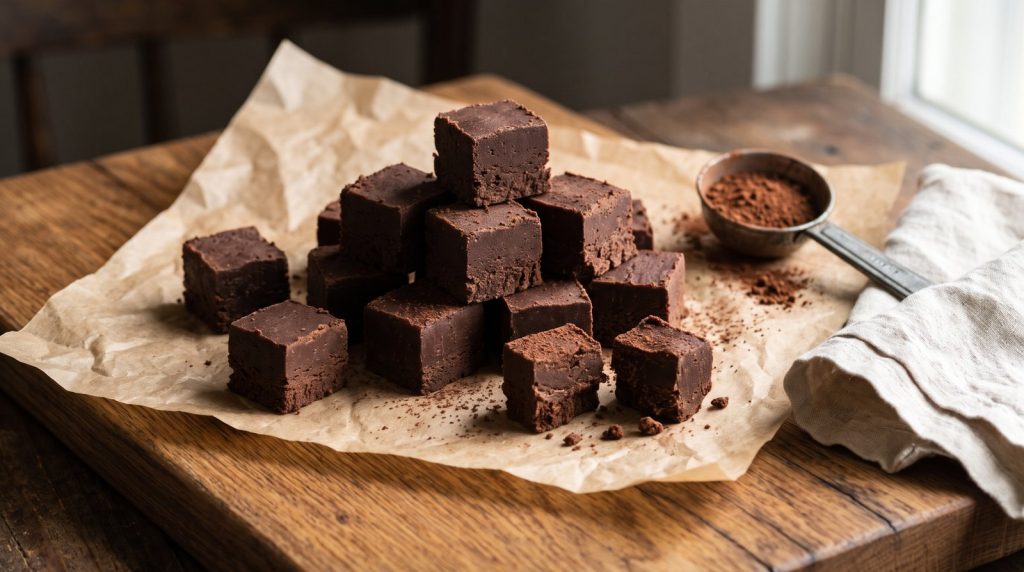
What Makes Old-Fashioned Fudge Work
Fudge is a crystal candy. You dissolve a lot of sugar in milk, boil off water until the syrup is concentrated enough to set, then let it cool so it becomes supersaturated. Beating at that point makes the sugar crystallize all at once into crystals too small to feel on your tongue.
Every rule in this recipe protects that process. No stirring during the boil keeps stray crystals from forming early, the cooling wait keeps them small, and the beating sets them in the creamy texture you want.
My mum made this fudge every Christmas in Ohio, beaten by hand with the same wooden spoon. The only time it failed was the year she got impatient and beat it hot.
Ingredient Notes
Exact amounts are in the recipe card below.
- Granulated sugar: plain white sugar. Brown sugar changes the flavor to butterscotch and makes the set less predictable, so I save it for pralines.
- Natural cocoa powder: the classic choice, bright and sharp. Dutch-process works too and tastes darker and milder.
- Whole milk: the traditional liquid. Half-and-half gives a slightly richer, softer fudge; skim milk gives a thinner flavor, so I don't use it.
- Light corn syrup: one tablespoon. It's an invert sugar that gets in the way of big crystals forming. Old recipes leave it out; I keep it in because it makes the fudge forgiving.
- Butter and vanilla: added off the heat, left on top, not stirred in until the beating starts. Vanilla added while boiling cooks away.
- Nuts (optional): toasted walnuts are the old-fashioned choice. Stir them in only after the fudge has lost its gloss, or they sink.
Step-by-Step Photos
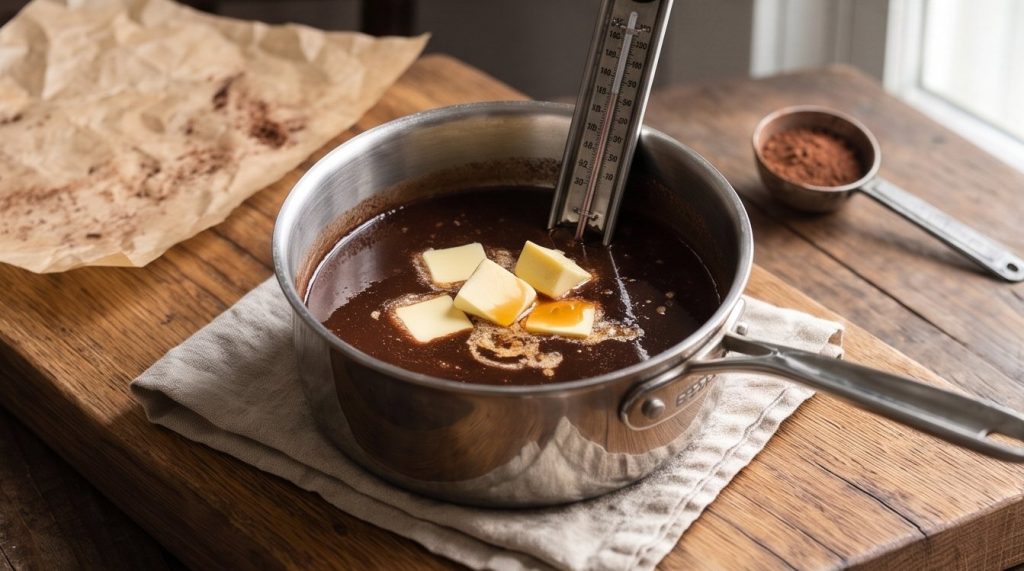
Here's how it comes together. Exact amounts, times and temperatures are in the recipe card below.



Tips for Success
- Calibrate the thermometer first. Clip it in a pan of boiling water: it should read 212°F (100°C) at sea level. If yours reads 208°F, cook the fudge to 232°F instead. The clip-on thermometer I use for candy gets this check every December before fudge season.
- Adjust for altitude. Water boils lower as you climb, so the soft-ball stage drops about 1°F for every 500 feet above sea level. At 2,500 feet, aim for 231°F. The boiling-water check above does this math for you.
- No stirring once it boils. Stirring knocks sugar crystals off the sides and seeds the whole pot. Wash the sides down with a wet pastry brush instead, and let the thermometer do the watching.
- Do the cold-water test as backup. Drop a little syrup into a cup of ice water. At soft-ball stage it gathers into a soft blob you can flatten between your fingers. If it dissolves, keep cooking; if it holds a firm ball, you've gone too far.
- Cool before you beat. This is the step everyone skips. Beating hot fudge makes big crystals and a sandy texture. Wait for 110°F, which takes close to an hour, and the crystals come out tiny and the fudge creamy.
- Watch for the gloss to go. The fudge beats from shiny and fluid to dull and thick in about a minute at the end. Pour the moment it dulls. My mum's rule in our Ohio kitchen was that the spoon leaves a trail that doesn't close back up.
- Pick a dry day. Sugar pulls moisture out of humid air, so fudge made on a rainy day sets softer and can weep. If the forecast is wet, I cook 1°F higher or wait for tomorrow.
- Keep the kids away from the pot. Sugar syrup at 236°F sticks to skin and burns badly. I keep a bowl of ice water on the counter the whole time, and nobody under grown-up height stirs.

Old-Fashioned Chocolate Fudge (Stovetop, No Condensed Milk)
36
pieces10
minutes25
minutes90
kcal2
hours45
minutesClassic cooked chocolate fudge the way it was made before condensed milk and microwaves: sugar, cocoa, whole milk and a little corn syrup boiled to the soft-ball stage, cooled with butter and vanilla on top, then beaten until it thickens and loses its shine. Firm, smooth and deeply chocolatey. Makes 36 pieces from an 8-inch pan.
Ingredients
- For the Fudge
3 cups granulated sugar
2/3 cup unsweetened cocoa powder (natural, not Dutch-process)
1/8 teaspoon fine salt
1 1/2 cups whole milk
1 tablespoon light corn syrup
4 tablespoons unsalted butter, cut into pieces
1 teaspoon pure vanilla extract
- Optional Stir-In
1 cup walnuts or pecans, toasted and chopped
Directions
- Line an 8-inch square pan with foil or parchment and butter it lightly. Set a bowl of ice water by the stove in case of splashes, and keep kids away from the pot: boiling sugar is far hotter than boiling water.
- In a heavy 3-quart saucepan, whisk the sugar, cocoa and salt until no cocoa lumps remain. Stir in the milk and corn syrup. Set over medium heat and stir constantly until the sugar dissolves and the mixture comes to a full rolling boil, about 8 minutes.

- Clip on a candy thermometer so the tip sits in the syrup but not on the pan bottom. Stop stirring. Boil, uncovered, until it reaches 236°F (113°C), the soft-ball stage, 12 to 18 minutes. Wash down any sugar crystals on the pan sides with a wet pastry brush.

- Take the pan off the heat. Drop the butter and vanilla on top without stirring them in. Let the pan sit, undisturbed, until the thermometer reads 110°F (43°C) and the bottom feels just warm, 50 to 60 minutes.

- Beat with a wooden spoon until the fudge thickens, turns from glossy to matte and just starts to hold a trail, 5 to 10 minutes. Stir in the nuts, if using, as soon as it dulls.

- Scrape it into the pan right away and press it flat with the back of the spoon. Cool at room temperature until firm, about 1 hour, then lift it out and cut into 36 squares. Store airtight at room temperature for up to 2 weeks.


Like this recipe?
Follow us @recipefairy on Pinterest
Fudge Troubleshooting
Nearly every fudge problem comes back to temperature or timing. Here's what went wrong and how I fix it.
| Problem | Likely cause | Fix |
|---|---|---|
| Grainy or sandy | Stirred during the boil, or beaten while hot | Re-melt with 1/4 cup milk, cook to 236°F again, cool to 110°F, beat |
| Won't set, stays soft | Undercooked (below 234°F) or humid day | Return to pot with 1/4 cup milk and recook to 236°F |
| Dry, hard and crumbly | Overcooked past 240°F, or beaten too long | Serve crumbled over ice cream; next time pour as soon as it dulls |
| Set in the pot before you poured | Beaten past the matte point | Press into the pan anyway and knead smooth; pour sooner next time |
| Greasy film on top | Butter stirred in while too hot and separated | Blot with paper towel; leave the butter on top until beating |
| Sugary crust on the pan sides | Crystals climbed the pan | Wash sides down with a wet pastry brush early in the boil |
Variations
Once the base behaves, it takes a small swap or stir-in well. Make the change after the fudge dulls so the set isn't disturbed.
- Rocky road: fold in 1 cup of mini marshmallows and 1/2 cup of chopped almonds right after beating.
- Peanut butter swirl: drop spoonfuls of peanut butter over the fudge in the pan and swirl with a knife.
- Peppermint: swap the vanilla for 1/2 teaspoon of peppermint extract and press crushed candy canes on top.
- Mocha: dissolve 2 teaspoons of instant espresso powder in the milk before cooking.
- Salted: sprinkle flaky sea salt over the pan before it sets. It's how I make it for grown-up gift boxes.
Storage, Gifting and Make-Ahead
Cooked fudge keeps better than the quick kind. Layer the squares between parchment in an airtight tin and keep it at cool room temperature for up to 2 weeks; it actually tastes better on day two.
For gifts, cut it the day you pack it so the edges stay sharp. It freezes well for up to 3 months, double wrapped, and thaws unwrapped on the counter so moisture doesn't bead on the surface. I make two pans in early December and freeze one for the week before Christmas.
More Candy and Chocolate Recipes
If you want the five-minute kind, my microwave peanut butter fudge needs no thermometer at all. For the holiday tin, add buckeye brownie cookies and a batch of chocolate covered pretzels. You'll find more in our Christmas recipes collection and the easy desserts roundup.
Frequently Asked Questions
What is the soft-ball stage for fudge?
Soft-ball stage is 235 to 240°F (113 to 116°C). I pull cocoa fudge at 236°F. At that point a drop of syrup in ice water gathers into a soft ball you can flatten with your fingers. Below 234°F the fudge stays too soft to slice; above 240°F it turns dry and crumbly.
Why is my old-fashioned fudge grainy?
Almost always because large sugar crystals formed: the pot was stirred after it boiled, crystals from the pan sides fell in, or the fudge was beaten while still hot. Let it cool to 110°F before beating. The tablespoon of corn syrup in this recipe is extra insurance against graininess.
Why didn't my fudge set?
It was pulled from the heat too early, usually under 234°F, or it was made on a humid day. Check your thermometer in boiling water. If the fudge is already in the pan and still soft after 2 hours, scrape it back into the pot with 1/4 cup of milk and cook it again to 236°F.
Can I make this fudge without a candy thermometer?
Yes, with the cold-water test. Drip a little syrup into a cup of ice water every minute or two after it has boiled for about 10 minutes. When it forms a soft, flattenable ball, it is ready. A thermometer is more reliable, and an inexpensive clip-on one is all you need.
What is the difference between old-fashioned fudge and easy fudge?
Old-fashioned fudge is cooked sugar, cocoa and milk boiled to soft-ball stage and beaten so it crystallizes into a firm, smooth candy. Easy or quick fudge uses sweetened condensed milk or marshmallow creme and melted chocolate, so it sets without cooking to temperature. Quick fudge is softer and tastes milkier.
How long does homemade fudge last?
Stored airtight at room temperature with parchment between the layers, it keeps for about 2 weeks. In the fridge it lasts 3 to 4 weeks but can dry out, so wrap it well. For longer storage, freeze it, double wrapped, for up to 3 months and thaw it unwrapped at room temperature.
Can I use Dutch-process cocoa or add chocolate?
Natural cocoa gives the sharpest, most classic flavor and is what I use. Dutch-process works and tastes rounder and darker. For an extra-rich fudge, add 2 ounces of chopped unsweetened chocolate with the sugar and cocoa; it melts into the syrup and deepens the color.


