
✔ Updated · 45 sour foods in 7 groups
Sour foods get their tang from natural acids, and they show up everywhere from the fruit bowl to the pickle jar. Here are 45 of them, grouped so you can find the right one fast. For the other side of the flavor wheel, see our list of foods that are sweet.
Common sour foods include lemons, limes, grapefruit, cranberries, tart cherries, gooseberries, rhubarb, tamarind, green mangoes and Granny Smith apples, plus fermented and pickled foods like dill pickles, sauerkraut, kimchi, umeboshi and sourdough bread. Tangy dairy (plain yogurt, kefir, buttermilk, sour cream) and seasonings like vinegar and sumac round out the list. Their sourness comes from citric, malic, tartaric, lactic or acetic acid.
- 10 everyday examples: lemon, lime, grapefruit, cranberries, green apples, rhubarb, pickles, sauerkraut, plain yogurt and vinegar.
- Most sour fruit: lemons and limes, closely followed by bilimbi and tamarind.
- Most sour food overall: umeboshi (Japanese salted ume) is often named the sourest.

What Makes Food Taste Sour?
Sour is one of the five basic tastes, and it comes from acids. The more acid a food has (the lower its pH), the more sour it tastes. Most sour foods get their tang from one of these five acids.
| Acid | Where it's found | Taste |
|---|---|---|
| Citric acid | Lemons, limes, grapefruit, cranberries, currants | Sharp, bright and clean |
| Malic acid | Green apples, sour cherries, rhubarb, gooseberries | Tart and lingering |
| Tartaric acid | Tamarind, grapes | Puckery, slightly astringent |
| Lactic acid | Yogurt, kefir, sauerkraut, kimchi, sourdough | Mellow, tangy and rounded |
| Acetic acid | Vinegar, quick pickles, kombucha | Sharp and pungent |
Sour Citrus Fruits

Lemons
The classic sour fruit, about 5 to 6% citric acid. Use the juice and zest in dressings, drinks, desserts and marinades.
Get the recipe →Limes
As sour as lemons with a more floral, slightly bitter edge. Essential in salsa, guacamole, Thai curries and margaritas.
Grapefruit
Sour and slightly bitter, especially white and pink varieties. Eat it halved for breakfast or add segments to salads.
Calamansi
A tiny Filipino citrus that tastes like a cross between lime and mandarin. Squeezed over pancit, fish and grilled meat.
Kumquats
Olive-sized citrus eaten whole: the peel is sweet and the flesh is very sour. Great candied or sliced into salads.
Yuzu
A fragrant Japanese citrus with tart, aromatic juice. Used in ponzu sauce, dressings, cocktails and desserts.
Seville oranges
Bitter, sour oranges grown for cooking rather than eating. The traditional fruit for English orange marmalade.
Tart Fruits and Berries
Cranberries
So tart they're rarely eaten raw. Cooked into sauce, dried with sugar or juiced and sweetened for drinks.
Tart cherries
Sour cherries like Montmorency are too tart for snacking but perfect for pies, jams and tart cherry juice.
Gooseberries
Green or red berries with a sharp, grape-like sourness. Used in fools, crumbles, jams and chutneys.
Red currants
Small, glossy, jewel-red berries with a bright sourness. Made into red currant jelly for roast lamb and game.
Blackcurrants
Intensely tart, earthy berries rich in vitamin C. Popular in jams, cordials, syrups and baked desserts.
Granny Smith apples
The tartest common apple, thanks to malic acid. Holds its shape in pies and adds crunch to slaws and salads.
Green mangoes
Unripe mangoes are crisp and very sour. Eaten with salt and chili, or in Thai green mango salad and Indian pickles.
Tamarind
Sticky brown pulp from a pod, sweet-sour and tangy. Key in pad thai, chutneys, Worcestershire-style sauces and drinks.
Bilimbi
A small green fruit related to starfruit, so sour it's almost never eaten raw. Used to sour curries and pickles.
Passion fruit
Aromatic, seedy pulp with a strong sweet-tart flavor. Spoon it over yogurt, pavlova, cheesecake or into drinks.
Lingonberries
Small red Scandinavian berries similar to cranberries. Served as a sweet-tart jam with meatballs and potato pancakes.
Sea buckthorn
Bright orange berries with a sharp, citrusy sourness. Juiced, made into syrups or added to sauces and desserts.
Sour Vegetables and Greens
Rhubarb
Botanically a vegetable, cooked like a fruit. The tart pink stalks go into pies, crumbles and compotes; never eat the leaves.
Sorrel
A leafy green with a lemony sourness from oxalic acid. Used in soups, sauces for fish and spring salads.
Tomatillos
Papery-husked green fruits used as vegetables in Mexican cooking. Tangy and bright, the base of salsa verde.
Fermented and Pickled Sour Foods

Dill pickles
Cucumbers soured in vinegar brine or by lacto-fermentation. A staple on burgers, sandwiches and relish trays.
Get the recipe →Sauerkraut
Finely shredded cabbage fermented with salt until tangy. Served with sausages, pork and on Reuben sandwiches.
Kimchi
Korean fermented cabbage and radish with chili, garlic and ginger. Sour, spicy and savory; gets more sour with age.
Umeboshi
Japanese ume fruit salted and dried, often named the sourest food. Eaten in rice balls, with rice or in small bites.
Preserved lemons
Lemons cured in salt and their own juice for about a month. Chopped into Moroccan tagines, dressings and grain salads.
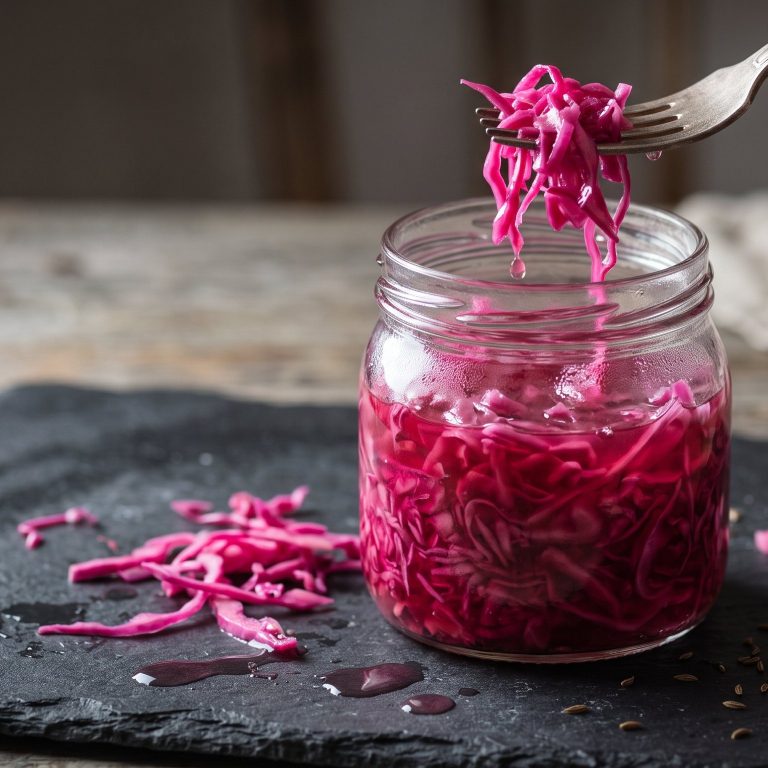
Pickled red cabbage
Sliced red cabbage soaked in sweetened vinegar. Adds crunch and a bright sour bite to tacos, bowls and sandwiches.
Get the recipe →Pickled ginger
Thin slices of young ginger in sweet rice vinegar, served with sushi to refresh the palate between bites.

Sourdough bread
Bread leavened with a wild yeast starter. Lactic and acetic acids from the starter give it a mild sour tang.
Get the recipe →Kombucha
Sweetened tea fermented with a SCOBY into a fizzy, tart drink. It can contain trace amounts of alcohol.
Tangy Dairy Foods
Plain yogurt
Milk fermented with live cultures that produce lactic acid. Unsweetened yogurt, especially Greek-style, is noticeably tangy.
Kefir
A drinkable fermented milk, thinner and tangier than yogurt, with a slight fizz. Great in smoothies and dressings.
Buttermilk
Cultured low-fat milk with a sour tang. Tenderizes fried chicken marinades and makes fluffy pancakes and biscuits.
Sour cream
Cultured cream with a rich, mildly sour flavor. Spooned onto tacos, baked potatoes and chili, or used in dips and cakes.
Quark
A soft, fresh German-style cheese with a clean, tart taste. Used in cheesecake, dips and as a high-protein spread.
Crème fraîche
Thick cultured cream, tangy but milder than sour cream. Doesn't curdle when simmered, so it's ideal for sauces.
Sour Seasonings and Condiments

Vinegar
Made by fermenting alcohol into acetic acid, usually about 4 to 7% acidity. White, cider, wine, rice and balsamic all add sourness.
Get the recipe →Sumac
Ground dried red berries with a lemony sourness. Sprinkled on fattoush, kebabs, hummus and roasted vegetables.
Amchur
Indian dried green mango powder. Adds fruity sourness to chaat, curries and marinades without adding liquid.
Pomegranate molasses
Pomegranate juice reduced to a thick, sweet-sour syrup. Used in Middle Eastern dressings, glazes and muhammara.
Citric acid
Also sold as sour salt. A pinch adds pure sourness to candy coatings, canning, cheese-making and drinks.
Sour Dishes and Treats
Sour candy
Gummies and hard candies coated in citric or malic acid. The extreme varieties are among the sourest things people eat.
Sinigang
A Filipino soup soured with tamarind, with pork, shrimp or fish and vegetables. Pleasantly sour and comforting.
Tom yum soup
A Thai hot and sour soup with lemongrass, lime juice, galangal, chili and shrimp. Bright, sour and spicy.
The Most Sour Foods
Sourness depends on the amount of acid and how much sugar balances it. Roughly from most to least sour, these are the tartest foods most people will try:
- Umeboshi: salted ume fruit, intensely sour and salty.
- Extreme sour candy: coated in concentrated food acids.
- Lemons and limes: juice has a pH of about 2.0 to 2.6.
- Bilimbi: rarely eaten raw because of its acidity.
- Tamarind: especially unripe or sour varieties.
- White vinegar: about 2.4 to 3.4 pH, always diluted in food.
- Cranberries and red currants: very tart raw, usually sweetened.
How to Use Sour Foods in Cooking
- Brighten rich dishes: a squeeze of lemon or splash of vinegar cuts through fatty meats, creamy sauces and fried food.
- Balance sweetness: lemon in desserts like a lemon posset keeps them from tasting flat.
- Tenderize: buttermilk and yogurt marinades soften chicken and lamb. Cook chicken to 165°F.
- Balance with sugar and salt: sweet-and-sour dishes like sweet and sour chicken pair vinegar with sugar.
- Add at the end: citrus juice and fresh herbs lose their brightness with long cooking, so stir them in just before serving.

Frequently Asked Questions
What are 10 examples of sour foods?
Ten common sour foods are lemons, limes, grapefruit, cranberries, Granny Smith apples, rhubarb, dill pickles, sauerkraut, plain yogurt and vinegar. Other examples include tamarind, gooseberries, kimchi, kefir, sourdough bread and umeboshi.
What is the most sour food in the world?
Umeboshi, the Japanese salted ume fruit, is often called the sourest natural food. Extreme sour candies coated in citric and malic acid can taste even more sour. Among fresh fruits, lemons, limes and bilimbi are the most acidic.
Which fruits are sour?
Sour fruits include lemons, limes, grapefruit, calamansi, kumquats, yuzu, cranberries, tart cherries, gooseberries, red currants, blackcurrants, green apples, green mangoes, tamarind, bilimbi, passion fruit, lingonberries and sea buckthorn. Most get their tartness from citric or malic acid.
Are sour foods healthy?
Many sour foods are nutritious: citrus and berries supply vitamin C, and fermented foods like yogurt, kefir, kimchi and sauerkraut contain live cultures. Acidic foods can wear tooth enamel, so rinse with water after very sour foods and avoid brushing right away.
Why do sour foods make your mouth water?
Acids in sour foods trigger the salivary glands. Saliva helps neutralize the acid and protect your teeth, which is why lemons, pickles and sour candy make your mouth pucker and water almost instantly.


